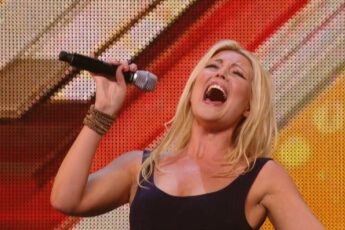
Some songs feel sacred, the kind you approach with a quiet reverence because they’ve been played at weddings, funerals, and every major life moment in between. Whitney Houston’s catalogue lives in that space: towering vocals, unforgettable phrasing, and an emotional weight that can flatten even confident performers. So when someone walks into an audition room and chooses one of her classics, there’s an immediate tension in the air — a mix of respect, fear, and curiosity. That’s the backdrop to what Lauren Platt did on The X Factor, and why her audition still sends a shiver down the spine years later.
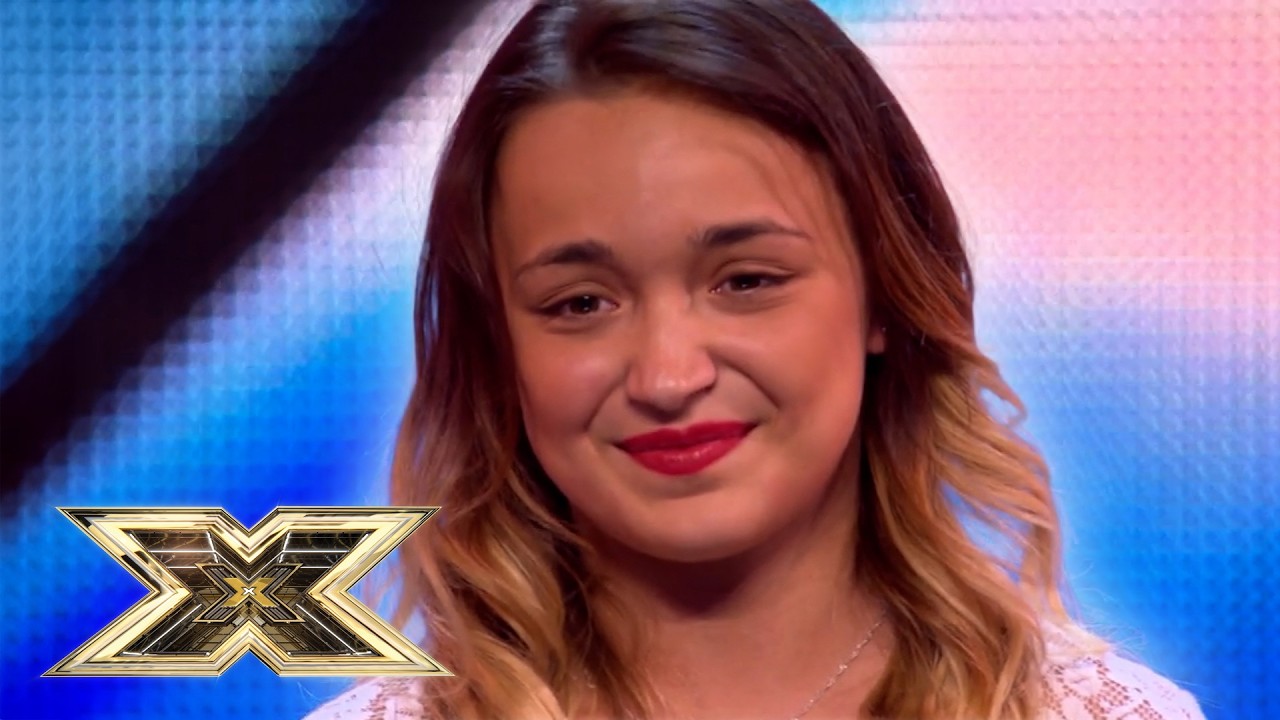
Lauren didn’t storm the stage with bravado or try to out-sparkle the memory of Whitney’s original. Instead, she arrived quietly, almost unassumingly, with a softness about her that made people lean in. You could tell she wasn’t trying to manufacture drama; she simply let herself be present. In a sea of contestants who often choose spectacle over substance, that calm felt like a bold choice in itself. Her outfit was simple, her smile small, and there was a vulnerable honesty about the way she introduced herself — the kind of vulnerability that invites listeners to do one thing: pay attention.
When she opened her mouth, the room shifted. The first notes were delicate, stripped of the belting and fireworks that people immediately associate with Whitney. That was the first moment Lauren signalled she wasn’t attempting imitation. She was offering interpretation. As she moved through the verses, you could feel the difference: instead of recreating the vocal acrobatics, she leaned into the lyric, letting each phrase breathe. The result was a version that sounded contemporary and intimate, as though she’d taken a classic and translated it into the language of a younger generation.
Small decisions made the performance feel personal. Where Whitney might hold a sustained, sky-reaching note, Lauren would soften the edge and let the emotion live in the space before the next phrase. A delicate rasp here, a barely-there hesitation there — these weren’t flaws; they were choices that allowed listeners to hear the song’s heartbreak and resilience in a new light. You could imagine a teenager listening to this rendition and suddenly understanding parts of the lyric they’d never noticed before. That’s the power of reinterpretation: it doesn’t erase the original, it adds another layer.
The judges’ reactions were telling. Initially, there was the predictable skepticism — after all, attacking a Whitney classic sets the bar impossibly high. But as Lauren unfolded the song, skepticism softened into surprise, and surprise into clear admiration. No one jumped in with a critical remark or an interruption. They sat back and listened, which in the context of televised talent shows is itself a form of praise. When feedback came, it wasn’t about comparing her to Whitney; it was about acknowledging that Lauren had done something rarer than mimicry: she had found her own voice inside someone else’s song.
Beyond technique, what made the audition resonate was the emotional honesty driving it. In an era where so much music is engineered to go viral in a ten-second clip, Lauren’s approach felt almost defiant. She trusted that if she told the truth of the lyric — if she allowed herself to be seen rather than hidden behind a string of runs and riffs — the audience would respond. And respond they did. You could see people in the crowd visibly moved, some wiping away tears, others leaning forward as if the song had become a private confession between singer and listener.
That audition also sparked conversations about what it means to “own” a song. Whitney’s versions are definitive for many, but music, by nature, evolves. When a young artist like Lauren takes a classic and filters it through her own sensibility, she’s not diminishing the past; she’s bridging generations. She showed that respect can look different from replication. By honoring the emotional core of the song while simplifying the delivery, she made space for listeners who might never have connected with the original to experience it anew.
In the days after the episode, clips of the audition circulated online, and the responses were revealing. Longtime fans applauded the respectful nod to a legend; younger viewers praised the modern vulnerability; vocal coaches debated the technical choices. Most comments, however, echoed the same sentiment: Lauren’s version felt honest. That word — honest — is not trivial in pop culture. It means you believed the person onstage, that their feelings translated across the spotlight and the screen.
Lauren Platt’s audition didn’t rewrite the rulebook for covering legendary material, but it did offer a quiet manifesto: you don’t have to out-sing the original to make something yours. Sometimes the braver move is to pare back, to lean into the lyric and let the music do the emotional heavy lifting. In that pared-down space, Lauren found her voice. She honored Whitney without trying to be her, and in doing so, she handed a Whitney classic to a new generation wrapped in her own truth. That’s why, years later, people still click play and feel the same little jolt — the one that tells you a performance has landed not just in the ear, but in the heart.
👉 What do you think about Lauren Platt Singing style? Share your thoughts in comment! 💬✨