
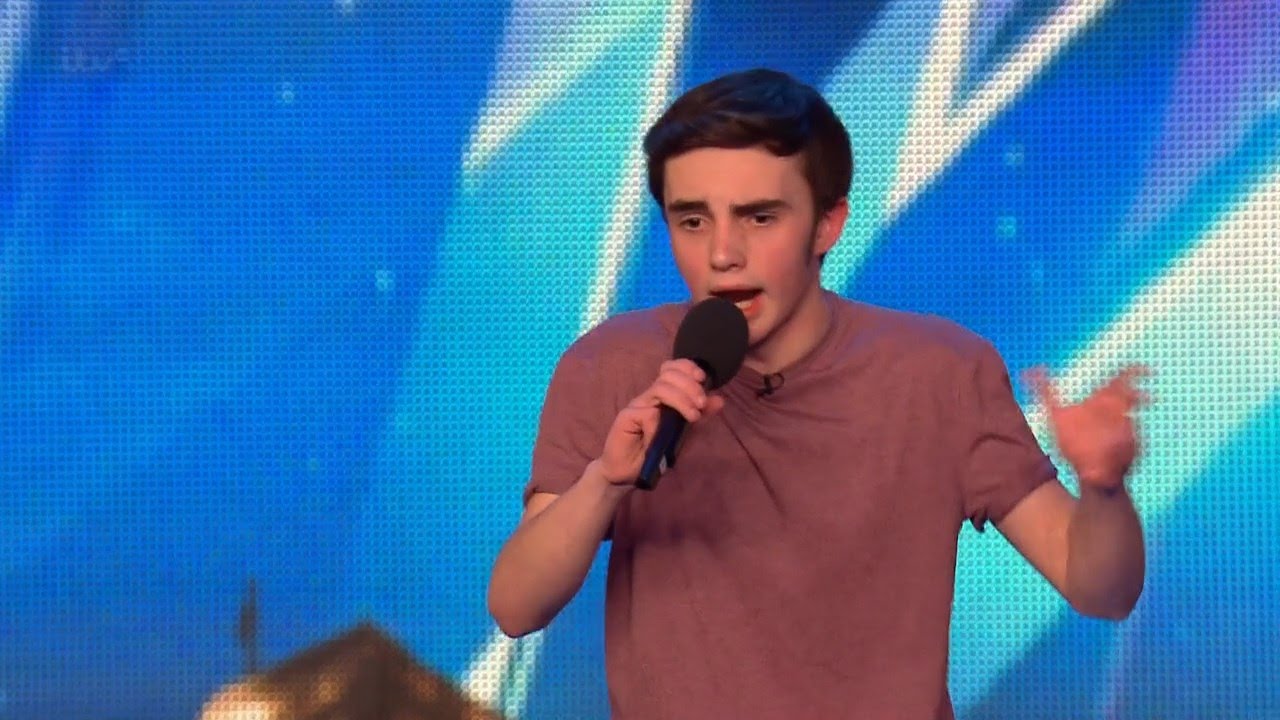
Fifteen-year-old Daniel Chettoe stepped onto the Britain’s Got Talent (BGT) stage, his youthful face revealing a mix of excitement and nerves. Dressed in casual attire that spoke to his age—jeans and a simple t-shirt—he seemed to fit the mold of a typical teenage performer, someone who might deliver a pop or rock song. The audience, along with the judges, were likely preparing themselves for a familiar routine that often accompanies young singers on such platforms. With his calm demeanor, Daniel exuded a sense of determination, yet the low expectations set the stage for what would soon become one of the biggest sonic revelations of the season.
As the spotlight illuminated him, Daniel smiled nervously but was clearly ready to showcase his talent. He had chosen to sing “Cry Me a River,” a timeless jazz standard associated with legends like Julie London and Barbra Streisand. The selection alone suggested depth beyond his years, yet as the opening notes filled the auditorium, the audience remained unsuspecting, expecting to witness the naivety often characteristic of teenage artists. What followed was nothing short of astonishing.
The moment Daniel opened his mouth, a smooth, deep, and incredibly mature baritone voice emerged, instantly silencing the chatter and creating an electric atmosphere in the room. His vocals had a rich texture and control that belied his youth, reminiscent of seasoned crooners like Frank Sinatra or Michael Bublé. Every note soared in an effortless display of vocal prowess, with a vintage quality that transported listeners back to an era of classic jazz lounges and smoky bars. The sheer maturity of his tone, complemented by a flawless understanding of jazz phrasing, left the room in stunned silence, proving that this boy truly belonged to another era entirely.
As he navigated through the song, the audience became spellbound, completely enraptured by Daniel’s unexpected vocal journey. His ability to convey the haunting emotions of the lyrics spoke to a wisdom far beyond his fifteen years. With each heartfelt phrase, it became evident that this performance was not merely about hitting the right notes; it was an emotive experience that engaged everyone present. The rich resonance of his voice filled the auditorium, enveloping the audience in a warm embrace, and each verse was met with growing admiration and awe.
As Daniel reached the climax of the song, the audience erupted in cheers, an overwhelming wave of support that filled the venue. Their applause was not just for a talented young singer but for a revelation, a discovery that often hides behind youthful exteriors. The judges were equally stunned, their eyes wide and expressions reflecting disbelief and admiration. The moment was electric, a snapshot of pure talent that warmed the hearts of those fortunate enough to witness it.
In the closing moments of the clip, the camera captured a brief glimpse of the standing ovation, an outpouring of appreciation from the audience that resonated throughout the theater. The judges exchanged looks of astonishment, their initial expectations shattered by the incredible performance that had just unfolded before them. This dramatic contrast between Daniel’s youthful appearance and his classic, powerful voice created a striking visual narrative—a reminder that artistry can emerge from the most unexpected places.
Daniel Chettoe’s performance became a triumphant showcase of unexpected talent, a testament to the idea that true vocal gifts can surface from the unlikeliest of candidates. His ability to bridge generational gaps through music revealed not just a skilled performer, but an artist capable of reviving classic sounds and styles. With every note, Daniel left an indelible mark on both the audience and the judges, ensuring that his name would be remembered long after the final curtain fell. In that singular moment, he transcended the label of a teenage contestant and stepped into the realm of genuine artistry, proving that talent knows no age and can rise to the occasion against all preconceived notions.